
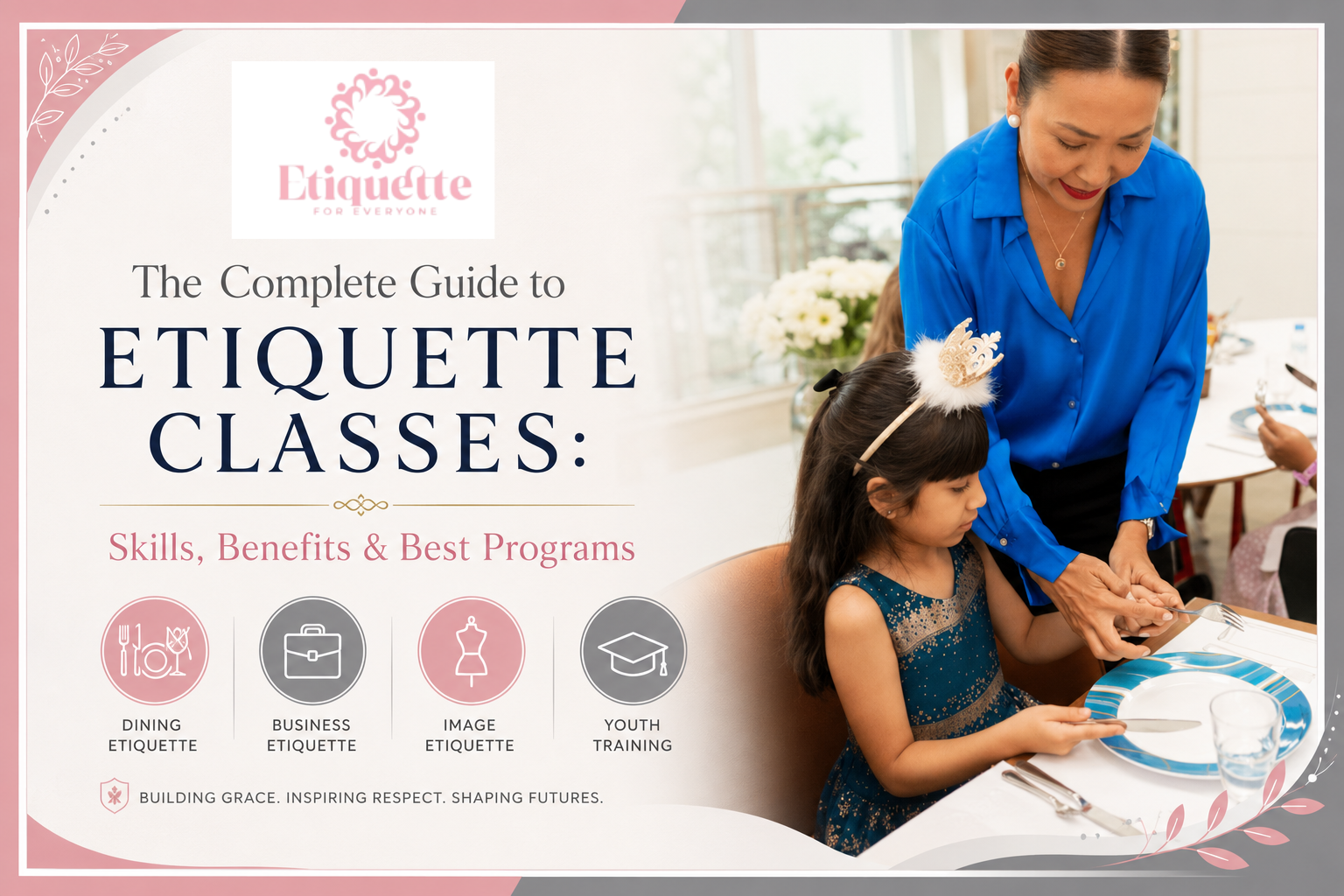
The Complete Guide to Etiquette Classes: Skills, Benefits & Best Programs
Good manners used to be something we picked up by watching our parents or grandparents. Today, life moves faster, workplaces are more global, and first impressions often happen over a screen rather than across a dinner table. This is precisely why etiquette classes have become such a huge hit in recent times – people need direction and structured information on how to interact and network effectively with poise and confidence.
If you are looking forward to getting a job interview or working with people from different countries or cultures, or if you just want to teach proper etiquette to your kids for their future success in life, then etiquette can be a great help for you. Dubai with its bustling environment of business is especially seeing an increase in popularity of structured confidence classes for adults and youngsters.
In this blog, we will tell you about all that etiquette lessons cover, why they are important, who benefits the most and how to choose the best class – including what to check for in etiquette training Dubai. At the end of this guide, you will have a good idea about whether or not you need an etiquette course for yourself or your family members.
What Are Etiquette Classes?
Etiquette is often reduced to “which fork to use,” but that’s a narrow and outdated view. Etiquette is fundamentally an ensemble of behaviour codes that will help people communicate in a polite manner, facilitate interaction, and enable them to smoothly go through any kind of social or business setting.
Nowadays, business etiquette Dubai is not limited to the dinner table anymore. It comprises your speaking skills, listening skills, how you behave during meetings, and how you reply to emails. A class for etiquette nowadays is all about gaining confidence and social awareness.
What is Taught in Etiquette Classes?
A complete course normally includes both technical and interpersonal skills such as:
- Skills in communication – speaking, listening and communication
- Skills in body language – posture, eye contact, handshake and gestures
- Social skills – greetings, introductions and social behavior
- Etiquette in a professional setting – professionalism and working with business contacts
- Etiquette in dining – good behavior while having food in formal and informal settings
- Etiquette in the cyber world – emails, telephone conferences and cyber etiquette
- Skills in confidence and presentation – grooming, dressing and executive presence
Each etiquette workshop normally involves situations where the learned skills are immediately put into practice.
Why Are Etiquette Classes Important Today?
Building Self-Confidence
Knowing exactly how to greet someone, start a conversation, or handle a formal dinner removes a lot of social anxiety. This is not only a characteristic of a person’s personality, but confidence can also be taught and built.
Creating Positive First Impressions
Time after time, psychological research proves that people form their opinions about other individuals within seconds after meeting them. Your handshake, eye contact, introduction – it all makes an impact before you say a single word.
Improving Personal Relationships
Etiquette is not only applicable in the boardroom. Good manners, communication skills, and behavior make for stronger interactions with friends and family members.
Developing Professional Skills
Professional etiquette influences how you are perceived by your colleagues, customers, and bosses as an efficient professional. Good behavior on the job can often provide advantages that purely technical skills can’t.
Enhancing Communication and Social Confidence
Communication training teaches how to communicate effectively, to interpret social signals, and adjust your tone of voice to your audience.
Types of Etiquette Classes
Social Etiquette Classes
These cover everyday manners such as greetings, introductions, and respectful behaviour in general social settings — ideal for anyone wanting to feel more at ease in unfamiliar company.
Business Etiquette Training
Focused on workplace professionalism, this includes conduct during business meetings, email etiquette, and networking skills. Business etiquette Dubai is particularly appealing because of the rapidly changing and multi-cultural corporate environment in the city.
Dining Etiquette Classes
In these courses, participants learn about formal dining protocols, table manners, and international dining etiquette – which can be helpful during business meals, weddings, and entertaining clients.
Image and Personal Branding
In this course, participants learn about personal grooming and dress codes, which help present oneself in a manner suited to one’s profession.
Public Speaking & Communication Training
These are the places where participants get educated on public speaking, voice modulation, and listening skills.
Digital & Online Etiquette
Since people work from home nowadays, digital etiquette will include proper meeting etiquette, social media etiquette, and email etiquette.
Who Should Join Etiquette Classes?
Etiquette training Dubai is not only meant for any particular age or profession. These can be beneficial for:
Young Professionals
Early in a career, small habits matter — how you introduce yourself, how you write an email, how you carry yourself in a first meeting. Such classes enable young professionals to cultivate such habits before they have committed workplace errors that cannot be easily undone.
Business Leaders and Executives
Experience has proven to be insufficient for business leaders and executives to develop their public presence, negotiation skills, and reputation.
College Students
Students preparing to enter the job market gain a real edge from such training at an etiquette school. It sharpens interview performance, networking ability, and overall readiness for internships and graduate roles.
Teenagers
It is a critical stage where social confidence can be built. These classes equip teenagers with skills to help them deal better with conversations, groups, and social occasions.
Children
Learning proper manners at an early age by enrolling them in a proper class instead of learning through experience will ensure that they grow up to be respectful adults.
Entrepreneurs
Business owners often wear every hat, including client-facing representative. Etiquette training strengthens the relationship-building skills needed to win and retain clients.
Anyone Looking to Improve Confidence
You don’t need a specific title or age to benefit. For anyone looking to gain confidence within a social and professional environment, there is great merit in taking an etiquette course.
Benefits of Joining Etiquette Classes
An etiquette lesson brings with it several benefits that cannot be easily dismissed. These include:
Better Communication Skills
The participants develop effective skills in communicating their thoughts in a clear manner and active listening, thus improving all conversations, be they social or professional.
Increased Confidence
When one knows how to deal with new social and professional environments, this reduces the uncertainties considerably.
Stronger Leadership Presence
Leadership isn’t only about authority — it’s also about how you carry yourself. This training at an etiquette school will make it possible for people to earn respect via their behavior and communication skills.
Improved Career Opportunities
When looking for employment, having good manners makes people more noticeable during the interview process or any other meeting.
Better Networking Skills
These lessons offer the knowledge of networking skills such as making and sustaining introductions, following up, and establishing a professional relationship.
Enhanced Emotional Intelligence
The ability to read social cues correctly and then to react appropriately is a skill that can be acquired from such kind of training.
Improved Personal Branding
People shape their personal brands through presentation skills such as verbal, visual, and behavioral.
Better Customer and Client Interactions
For anyone in a client-facing role, such training translates directly into smoother interactions, stronger trust, and better long-term business relationships.
Skills You Can Expect to Learn
Most etiquette lessons are designed around practical, transferable skills, such as:
Professional Introductions
How you introduce yourself — your handshake, eye contact, and opening words — sets the tone for every interaction that follows.
Conversation Etiquette
Participants learn how to start, sustain, and gracefully end conversations, along with how to handle small talk in unfamiliar settings.
Body Language
Posture, gestures, and facial expressions often communicate more than words. These classes help participants become aware of what their body language is actually saying.
Professional Dress Code
Understanding what to wear for different settings — client meetings, formal dinners, or the office — removes uncertainty and helps you present yourself appropriately.
Dining Etiquette
From place settings to pacing a meal, dining etiquette prepares participants for both formal dinners and everyday business lunches.
Business Meeting Etiquette
This covers how to conduct yourself in meetings — from punctuality and preparation to how you contribute and respond to others.
Public Speaking Confidence
These training sessions often include techniques for managing nerves, structuring thoughts clearly, and speaking with a confident, steady voice.
Cross-Cultural Etiquette
Cross-cultural awareness deserves special mention in a city as diverse as Dubai, where professionals regularly interact with colleagues and clients from vastly different cultural backgrounds. Understanding these differences helps avoid misunderstandings and builds stronger international relationships.
Online vs In-Person Etiquette Classes
Advantages of Online Courses
Online etiquette courses offer flexibility, convenience, and often a lower cost. They work well for individuals with busy schedules or those who prefer learning from home.
Benefits of Classroom Training
In-person etiquette training Dubai allows for hands-on practice — role plays, real dining setups, and immediate feedback from trainers, which can be harder to replicate virtually.
Which One Is Right for You?
If you’re working on nuanced skills like dining etiquette or body language, in-person lessons tend to be more effective. For general knowledge or busy professionals, online formats can still deliver solid value.
How to Choose the Right Etiquette Class
Not all confidence classes for adults are created equal. Before enrolling, consider the following:
Define Your Goals
Are you looking for personal growth, career advancement, or a specific business need like client relations? Getting clear on this first makes it much easier to pick a program that actually delivers what you need.
Check the Trainer’s Credentials
Look for relevant certifications and genuine real-world experience. A trainer’s background often tells you more about class quality than the marketing materials do.
Review the Curriculum
Ask for a breakdown of what’s actually covered. A strong etiquette course should map clearly to your goals, whether that’s business etiquette, dining etiquette, or communication.
Practical Activities and Role Plays
Hands-on learning — role plays, real dining setups, mock interviews — is far more effective than sitting through lectures alone. Ask how much of the course is practical versus theoretical.
Read Reviews and Testimonials
Genuine feedback from past participants tells you a lot about how a class is actually run and whether it delivers real results.
Certification and Post-Training Support
Some programs offer certification and ongoing support after the course ends, which can add extra value and credibility, particularly for professionals.
Real-Life Situations Where Etiquette Makes a Difference
Etiquette skills come into play more often than people realise:
- Job interviews
- Business networking events
- Client meetings
- Weddings and formal events
- Dining with clients
- International travel
- Public speaking
- Social gatherings
Why Professional Etiquette Training Is a Smart Investment
Investing in etiquette training Dubai pays off across multiple areas of life:
- Personal growth – greater self-awareness and confidence
- Career development – stronger workplace relationships and visibility
- Leadership skills – the presence and communication style expected of leaders
- Building lasting relationships – both personal and professional
- Lifelong confidence – skills that stay with you well beyond the classroom
Also Read: Etiquette Training Dubai: Elevating Professionalism and Confidence in a Global City
Conclusion
Etiquette training Dubai at Etiquette For Everyone equips individuals with practical, real-world skills that strengthen confidence, communication, and professionalism in everyday situations. From children learning table manners to executives refining their presence in the boardroom, there’s a program suited to every stage of life. If you’re considering etiquette training Dubai, take the time to choose a course from Etiquette For Everyone that aligns with your personal or career goals — the right training can make a lasting difference in how you communicate, connect, and present yourself to the world.
FAQs
Who should attend etiquette workshops?
Anyone looking to improve their confidence, communication, or professional presence — from children and teenagers to working professionals and business leaders.
What skills do etiquette courses teach?
They typically cover communication, body language, dining etiquette, professional conduct, digital behaviour, and self-presentation.
What is the difference between etiquette and communication training?
Etiquette training Dubai covers a broader range of social and professional behaviour, while training of communication focuses specifically on speaking, listening, and interpersonal expression.
Can an etiquette class improve confidence?
Yes, learning how to navigate social and professional situations with clarity naturally reduces anxiety and builds lasting confidence.
Is an online etiquette class effective?
Online classes work well for general knowledge and busy schedules, though in-person etiquette training in Dubai is often more effective for hands-on skills like dining etiquette and body language.
How do I choose the best etiquette workshop?
Look at the trainer’s credentials, review the curriculum, check for practical activities, and read genuine testimonials before enrolling.
Pingback: Etiquette Training Dubai for Personal & Career Growth
August 27, 2026 4:03 am